Steak
See also beef.
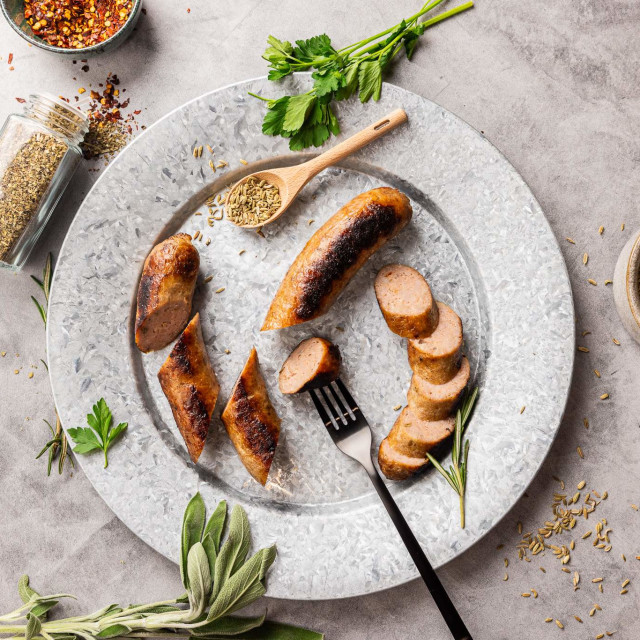
Steaks are slices of fish or meat (usually beef) that are ready to be cooked in individual portions. Fish steaks are typically five- to-eight ounce cuts from larger fish like salmon, halibut or tuna. Beef steaks come in a wide variety of cuts that will be explained here. After a quick primer, you'll be ready to enjoy a juicy steak right off the grill or make fantastic steak fajitas or steak au poivre.
Cuts
The most tender cuts of beef come from the cow's most lightly used muscles, especially the tenderloin, or short loin, along the upper back. More heavily exercised muscles from the animal's front (chuck) and rear (round) produce pieces that are tougher.
- Club (Shell)—Cut from the loin between the T-bone and rib section, this steak is firm, tender and flavorful. It has a bone along one side, but no tenderloin.
- Filet Mignon—This expensive boneless cut comes from the small end of the tenderloin. Lean and especially tender, filets are usually one to two inches thick.
- Flank Steak—Taken from the underbelly between the rib and hip, flank steak is long, thin and more fibrous. It's usually tenderized with a marinade, broiled or grilled whole, and then thinly sliced across the grain.
- London Broil—This is a general term for any lean and less tender steak cut from the top round, sirloin or shoulder.
- New York (Strip, Shell, Delmonico, Kansas City)—Cut from the short loin, this tender steak is like a porterhouse without the bone and tenderloin.
- Porterhouse—One of the best, most expensive cuts, this steak contains the most-tender meat from both the top loin and the tenderloin.
- Rib (Entrecôte)—Cut from the rib section, this steak is tender and flavorful. When the bones are removed, it is sold as the extremely tender rib-eye steak.
- Round—This cut is taken from the hind rump section. This tougher steak requires slow, moist cooking.
- Sirloin—This cut lies between the very tender short loin and the much tougher round. When boneless, these steaks are sold as top sirloin (more tender) and bottom sirloin (less tender). Popular bone-in sirloins include the pinebone, flat bone and round bone.
- Skirt—Cut from the flank, skirt steak is the diaphragm muscle, a long, flat piece of meat. Flavorful, but rather tough, this cut must be cooked properly (either quickly grilled or braised) for the best results.
- T-Bone—This crosscut of beef includes parts from the top loin and the tenderloin. It's similar to the porterhouse, but with a larger portion of choice tenderloin.
Buying Tips
In addition to becoming familiar with the different cuts, always look for brightly colored, red to deep red steaks with moderate marbling (flecks or streaks of fat). USDA grades will also g